Barrins Bulletin
September 2026
Greetings to Our Colleagues in Behavioral Health!
Dear Readers,
September is National Recovery Month, and we want to begin by recognizing the behavioral health providers and care teams whose work makes a meaningful difference in the lives of clients and families every day.
This month, we look at recovery from an important quality perspective: How do you know your program is producing meaningful outcomes? Measuring performance and using data to improve care are both good practice and regulatory expectations.
Our featured article looks at how organizations can move beyond simply collecting required data and use it to understand whether care is actually making a difference.
We also look at a challenge we frequently see during behavioral health construction and renovation projects: equipment that works perfectly well in an acute care environment may be completely unsuitable for a behavioral health setting. Bringing behavioral health clinical and regulatory leaders to the planning table early can prevent expensive—and potentially unsafe—decisions later.
On the accreditation front, Joint Commission has issued a significant revision to its Survey Process Guide, and this month’s EC News offers some particularly useful information on healthcare security.
We hope you find this month’s Bulletin practical and useful.
Best Regards,
John Berry
RN, MSN, CPHQ, SQIL
Principal Consultant
Practical Expertise. Behavioral Health Focus. Readiness That Lasts.

What CMS updates should be on your radar? How are the latest changes impacting the Conditions of Participation (CoPs)? And what do they mean for your organization’s compliance efforts, survey readiness, and patient safety?
Join CMS expert John Berry, RN, MSN, CPHQ, for a live discussion covering what healthcare leaders need to know, how the latest CMS updates may impact their organizations, and where to focus their attention now.
Have questions? Bring them. Get practical insight into today’s evolving CMS expectations—and the opportunity to hear directly from an expert.
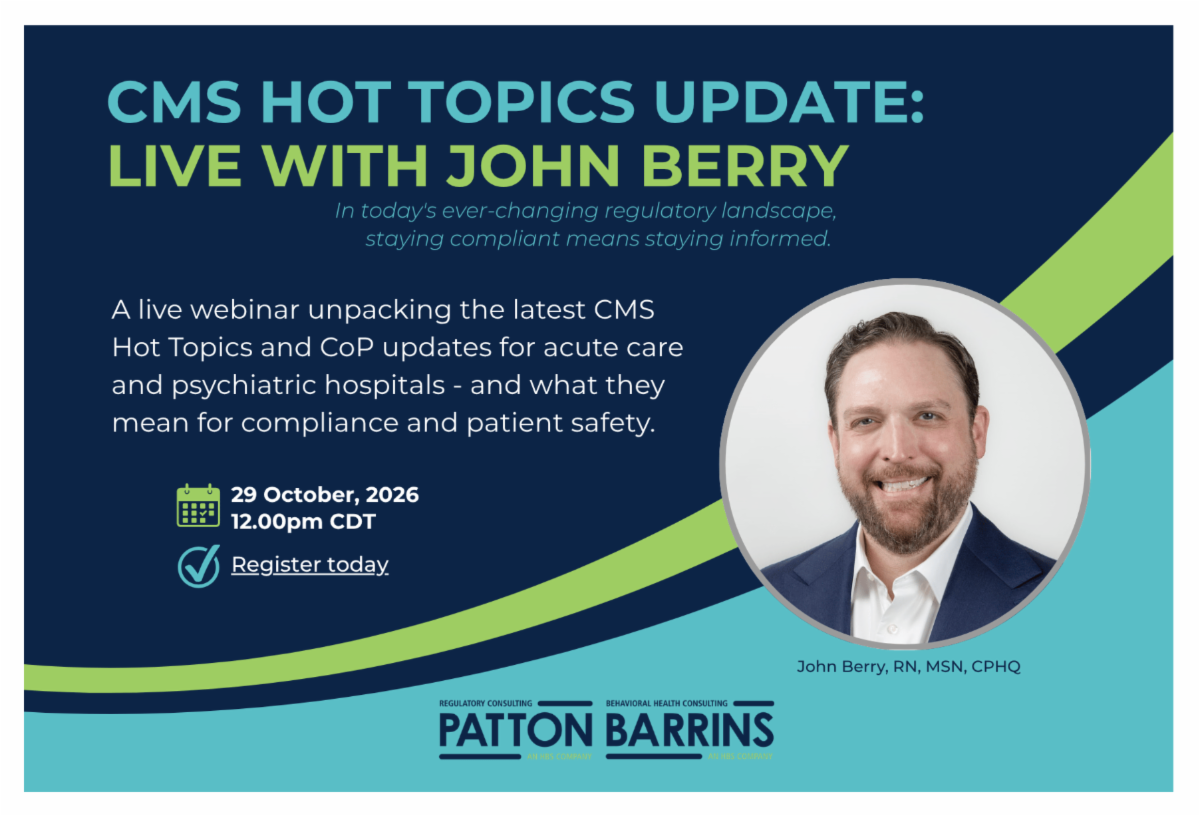
CMS HOT TOPICS UPDATE: LIVE WITH JOHN BERRY
Thursday, October 29, 2026 | 12:00 PM CDT
September is National Recovery Month, and we want to begin by applauding the behavioral health providers and care teams whose work is making a meaningful difference in the lives of individuals and families. There is encouraging news to celebrate. This July, SAMHSA…

For many behavioral health organizations, telehealth has become part of everyday operations. What began as a response to the COVID-19 public health emergency is now an established method of delivering psychiatric evaluations, therapy, medication management, and other…

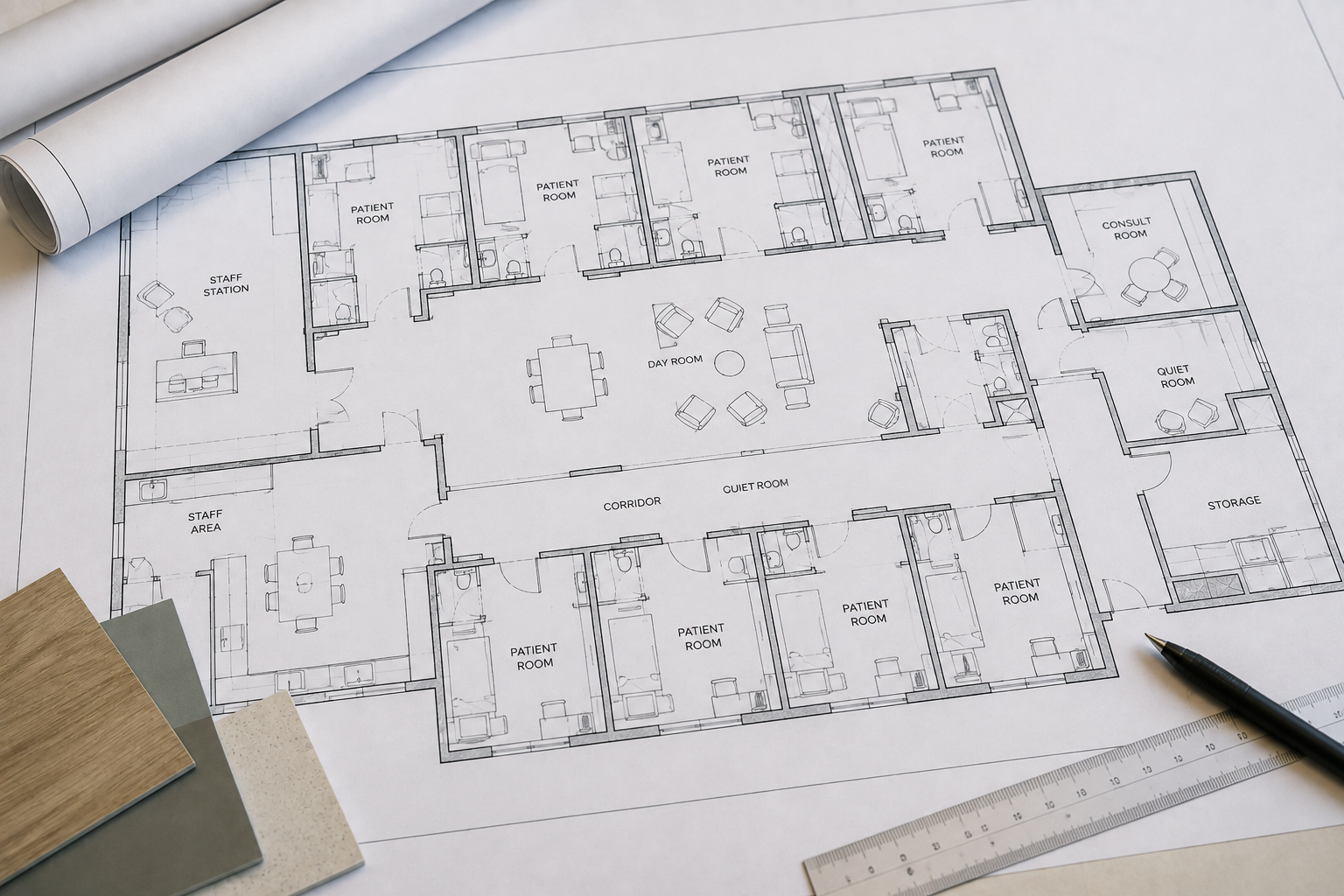
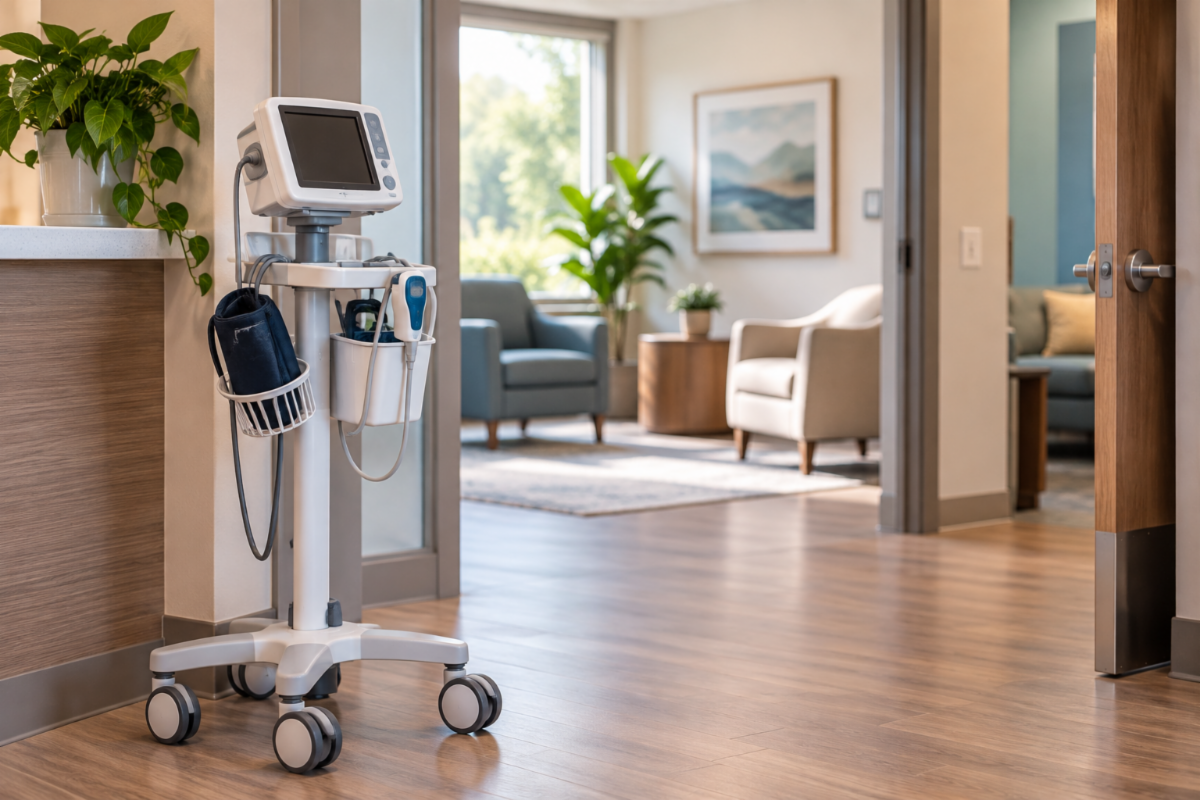
A piece of equipment can fit perfectly on the plans and still be completely wrong for a behavioral health environment. Healthcare construction already requires careful coordination of equipment, utilities, accessibility, infection prevention, life safety, clinical…
Joint Commission (JC)
What Does the New Joint Commission Survey Process Guide (SPG) Mean for Psychiatric Hospitals?
Joint Commission has released a major revision to its Hospital Survey Process Guide, replacing the version that became effective January 1, 2026.
One of the most noticeable changes is the organization of the material. The former 700-plus-page guide has been divided into two companion documents: the Survey Process Guide, containing the survey process and CMS Conditions of Participation evaluation modules, and a separate Surveyor Tool Guide (STG), containing the detailed tools surveyors use during the survey. These are the same tools you can use internally in preparation.
For psychiatric hospitals, this isn’t simply a formatting change. Numerous CMS evaluation modules and survey tools have also been revised.
What should you do now? First, make sure your accreditation and regulatory teams have downloaded and saved the new SPG and STG from Joint Commission’s public website. Next, review the revised Hospital Document List against the materials your organization currently prepares for Day One. Finally—and perhaps most importantly—get the applicable survey tools into the hands of the leaders who own the processes being evaluated.
Barrins Perspective: A revised survey tool is most valuable when the people responsible for the process understand how surveyors will evaluate their work. Use the new SPG and Surveyor Tool Guide as operational readiness tools—not documents that live only in the accreditation office.
What Should You Do?
Compare the new Joint Commission tools with your current tracers and survey-preparation process. If the survey process changed but your readiness tools didn’t, it may be time for an update.

A Small but Useful Joint Commission Reminder: One Set of Requirements
This month’s JC News includes a MythBusters item addressing a question that continues to create confusion for deemed organizations.
The myth: organizations must comply with one set of Joint Commission requirements for accreditation and another set for CMS deemed status.
Joint Commission’s answer is no. Compliance with its accreditation standards meets or exceeds the CMS requirements incorporated into the accreditation program.
For psychiatric hospitals, the practical takeaway is to avoid creating two parallel readiness systems—one labeled “Joint Commission” and another labeled “CMS.” Your readiness process should help leaders understand where CMS Conditions of Participation are incorporated into the accreditation requirements and how those expectations will be evaluated during survey.

Is Your Security Program Keeping Pace With Your Behavioral Health Risks?
This month’s EC News includes a particularly relevant article for behavioral health organizations: Security Advances in Healthcare. The article discusses security practices and technologies increasingly being seen in the field. Joint Commission makes clear that it does not require or endorse these specific technologies. Organizations are expected to evaluate their own risks and operational needs and determine appropriate security measures.
Developments discussed include weapons detection systems, AI-enhanced video surveillance, acoustic technology that can identify potential disturbances, expanded camera coverage, wearable duress and panic alarms, electronic access control and visitor management, body-worn cameras, and expanded security and law-enforcement programs.
Barrins Perspective: Don’t start with the technology. Start with your risks. Review your security risk assessment against actual incidents, near misses, staff concerns, client population, facility vulnerabilities, and changes in operations. A sophisticated security system cannot compensate for an incomplete risk assessment, unclear response procedures, or staff who aren’t prepared to use the system effectively.

Can You Account for Portable Equipment When Preventative Maintenance Is Due?
This month’s EC News also addresses the perennial problem of portable medical equipment that cannot be located when preventive maintenance is due.
CMS and Joint Commission require deemed organizations to achieve 100% completion of preventive maintenance for both high- and low-risk medical equipment. Joint Commission discusses several possible approaches, including real-time location systems, barcode tracking, departmental accountability, centralized equipment pools, and formal “could not locate” processes.
For psychiatric hospitals and behavioral health programs, ask for your current list of equipment that couldn’t be located for scheduled maintenance. Then follow a few items through your process. Who owns the search? How long does it continue? When does leadership become involved? And can you demonstrate what happened?
CMS
CMS Changes Psychiatric Hospital Quality Reporting: What Should You Know?
CMS recently finalized changes to its quality reporting requirements for inpatient psychiatric facilities. Two measures are being removed beginning with the 2026 reporting year: the alcohol-use brief intervention measure and the tobacco-treatment-at-discharge measure.
CMS is also moving ahead with the new Inpatient Psychiatric Facility Patient Assessment Instrument (IPF-PAI). This standardized assessment will mean new data collection and reporting expectations for psychiatric hospitals.
Barrins Perspective: Don’t wait for implementation to determine what these changes mean for your organization. Quality, clinical, regulatory, and IT leaders should review the new assessment requirements together and identify any changes needed in workflow, documentation, staff education, or technology.
And remember: a measure disappearing from CMS reporting doesn’t necessarily mean the clinical practice behind it is no longer important. Consider whether alcohol-use intervention and tobacco-treatment measures still provide useful information for your own quality program.

ACHC
Does the Plan of Care Tell The Story?
ACHC recently highlighted a familiar behavioral health challenge: the plan of care may meet the basic documentation requirement but still fail to function as the roadmap for care.
For readiness purposes, consider reviewing this through a clinical record tracer rather than a form audit.
Start with the assessment and identified needs. Follow those needs into the plan of care. Then review interventions, progress notes, reassessments, updates to the plan, and discharge planning.
Can you see a clear connection between the client’s assessed needs, treatment goals, services provided, progress, and changes to the plan?
A completed plan of care is not the same as an effective one.
Barrins Perspective: This is an area where documentation problems can reveal something larger than a documentation problem. When the assessment, treatment plan, progress notes, and discharge plan don’t connect, determine whether the problem is the record—or whether the clinical process itself has become fragmented.

CARF, CIHQ, COA, DNV, SAMHSA & QUAD-A
No additional detailed accreditor update was included in the September email beyond the items above.
Give One Survey Tool to the Person Who Actually Owns the Process
Here’s a simple readiness exercise for September:
Choose one tool from the new Joint Commission Surveyor Tool Guide. Give it to the clinical or operational leader responsible for that process and ask:
“If a surveyor used this tomorrow, what would they find?”
Have that leader perform the review—not the accreditation department. Then compare what the operational leader identifies with what your regulatory team sees.
This is a simple way to turn the new Joint Commission guidance into an immediate continuous-readiness exercise.

In this Issue
- How Do You Know Your Behavioral Health Program Is Producing Meaningful Recovery Outcomes?
- Your Telehealth Program is Working, But is it Survey-Ready?
- Could Equipment Placement Create an Accreditation Problem Before Your Facility Even Opens?
- Accreditor Insights & Updates: JC, CMS, ACHC
- Tip of the Month: Give One Survey Tool to the Person Who Actually Owns the Process
Why Choose Us?
“The Barrins Consultant was a true professional, combining a depth of expertise and knowledge with the communication skills to ensure his message is heard. The consultant’s insight into our business and services is deeply appreciated and greatly assists us in formulating strategic and financial goals for the coming year.”
CEO
Community Behavioral Health
Welcome Clients
We are pleased to welcome back MaineHealth Spring Harbor as a Barrins client and delighted that Universal Health Services (UHS) has renewed its partnership with us. We look forward to working with both organizations and continuing to support their accreditation and regulatory compliance goals.

Are You Survey Ready?
What is one high risk area of your organization you haven’t looked at recently through a surveyor’s eyes?
Choose it this month and trace it from beginning to end. If you need an independent view of your readiness, Barrins & Associates can help identify gaps, validate improvements, and focus your team on the issues most likely to impact care provided and matter during survey.
Barrins Perspective
Accreditation readiness is strongest when it is integrated into everyday operations—not treated as a separate regulatory exercise.
Contact Barrins & Associates to discuss how we can support your accreditation and regulatory readiness.