

The U.S. mental health crisis is placing unprecedented strain on emergency departments (EDs). Yet traditional EDs are ill-equipped for patients in acute psychiatric distress—leading to delays in care, increased safety risks, and long boarding times.
According to the CDC (2025), mental health-related ED visits are surging nationally. And in Massachusetts, nearly half of all psychiatric patients board for 12 hours or more before receiving care (Massachusetts HPC, 2025).
The Solution: EmPATH Units
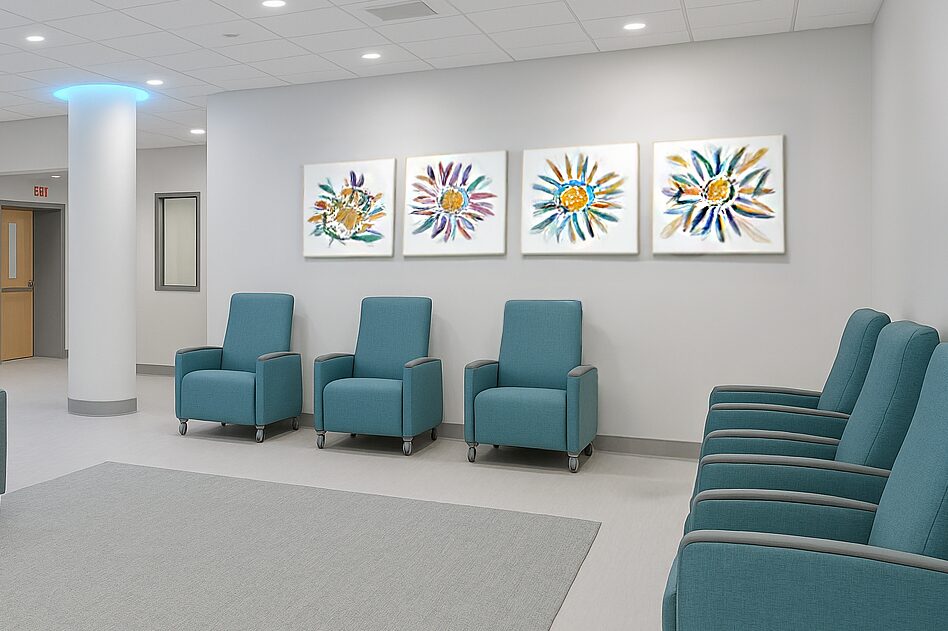
Enter the EmPATH unit—Emergency Psychiatric Assessment, Treatment & Healing Units. These purpose-built spaces, often adjacent to EDs, provide rapid access to therapeutic psychiatric care in a calm, open, and healing environment. Instead of beds behind closed doors, patients enter a well-lit room with comfortable recliners, staffed by a multidisciplinary team ready to de-escalate, assess, and treat.
EmPATH units were pioneered by Dr. Scott Zeller and deployed via Vituity, a national physician-led acute care organization partnering with many community and academic hospitals across multiple states. Vituity states it supported the launch of “more than sixty locations nationwide” by early 2025, across more than 30 states. Examples include:
| Hospital / System | Location |
|---|---|
| Fairview Southdale Hospital | Minnesota |
| Inova Fairfax Medical Campus | Virginia (DC metro) |
| University of Iowa Hospitals | Iowa |
| MUSC Health (Shawn Jenkins & UMC) | South Carolina |
| Griffin Health Hospital | Connecticut |
Why EmPATH Works: Key Benefits
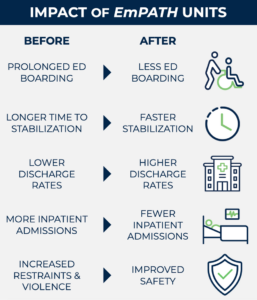
- Reduces ED Boarding for Psychiatric Patients
EmPATH units drastically shorten wait times and free up ED beds, improving throughput and compliance with Joint Commission patient flow standards. - Decreases Inpatient Admissions
By resolving crises in a lower-acuity setting, EmPATH units reduce unnecessary psychiatric hospitalizations, aligning with value-based care and lowering costs (Kim et al., 2022). - Provides Immediate Access to Psychiatric Care
With integrated psychiatric providers on site or via telepsychiatry, patients receive timely, focused evaluation—often within minutes of arrival. - Improves Outpatient Linkage and Continuity of Care
Strong discharge planning protocols help ensure patients connect to community care post-discharge, reducing recidivism and supporting long-term recovery. - Reduces Use of Restraints and Seclusion
The open design and trauma-informed approach minimize behavioral escalations, improving safety for patients and staff. - Enhances Patient and Family Experience
The environment is calming, humane, and therapeutic—resulting in higher satisfaction and fewer adverse events. - Boosts Staff Morale and Reduces Burnout
Separating behavioral health crises from the main ED improves working conditions for nurses, techs, and providers alike.
EmPath Units Align with National Standards
EmPATH units help hospitals meet SAMHSA’s national crisis care guidelines and address key Joint Commission National Patient Safety Goals—including those related to suicide prevention, ligature risks, and emergency response infrastructure (SAMHSA, 2025; TJC, 2023).
Implementation Essentials
To succeed, EmPATH units must be designed and operated with intention:
- Therapeutic Design
Includes ligature-resistant fixtures, quiet open layouts, and natural lighting. - Multidisciplinary Staffing
Psychiatry, nursing, social work, peer specialists—and telehealth support as needed. - Rapid Response Protocols
Streamlined triage, evaluation, and treatment workflows. - Robust Discharge Planning
Ensures warm handoffs and follow-up care. - Technology Integration
Real-time EHR access and psychiatric bed registries for coordination.
Bottom Line
EmPATH units are not just a compassionate response—they’re a strategic innovation. They improve safety, reduce costs, and enhance outcomes across the board. As quality and safety leaders, we have an opportunity to champion this model and reshape the way we respond to mental health crises—today and for the future.
Barrins & Associates
Ready to explore how an EmPATH Unit could transform care at your facility?. Contact us to learn more.
References
- Centers for Disease Control and Prevention. (2025). Mental health-related emergency department visits. Link
- Massachusetts Health Policy Commission. (2025). New research finds nearly half of behavioral health ED patients board over 12 hours. Link
- Kim, A. K., et al. (2022). EmPATH unit decreases hospital admission for suicidal patients. Am J Emerg Med. Link
- Substance Abuse and Mental Health Services Administration. (2025). National behavioral health crisis care guidance. Link
- The Joint Commission. (2023). Quick Safety Issue 19: ED boarding of psychiatric patients. Link