
Oct 23, 2026 by Barrins & Associates
BH Organizations, Hospitals
For Healthcare Quality Week, try turning a few familiar quality practices on their heads. October 18–24 is Healthcare Quality Week, an opportunity to recognize the professionals who lead quality and safety efforts—and the clinical and operational teams who put...
read more

Oct 14, 2026 by Barrins & Associates
ACHC, CARF, CMS, DNV, Joint Commission, SAMSHA, State AgenciesBH Organizations, Hospitals
Digital tools are moving beyond scheduling, documentation, and telehealth. Some are now part of treatment itself—creating new opportunities and new considerations for behavioral health leaders. Technology has been part of behavioral healthcare for years. Electronic...
read more

Oct 9, 2026 by Barrins & Associates
ACHC, CARF, CMS, DNV, Joint Commission, SAMSHA, State AgenciesBH Organizations
Depression Awareness Month is an opportunity to look beyond screening rates and ask whether screening is improving care. Nearly 20 million U.S. adults experienced a major depressive episode in 2025, according to the newly released National Survey on Drug Use and...
read more

Sep 15, 2026 by Barrins & Associates
ACHC, CARF, CMS, DNV, Joint Commission, SAMSHA, State AgenciesBH Organizations, Hospitals
September is National Recovery Month, and we want to begin by applauding the behavioral health providers and care teams whose work is making a meaningful difference in the lives of individuals and families. There is encouraging news to celebrate. This July, SAMHSA...
read more
Sep 8, 2026 by Barrins & Associates
ACHC, CARF, CMS, DNV, Joint Commission, SAMSHA, State AgenciesBH Organizations
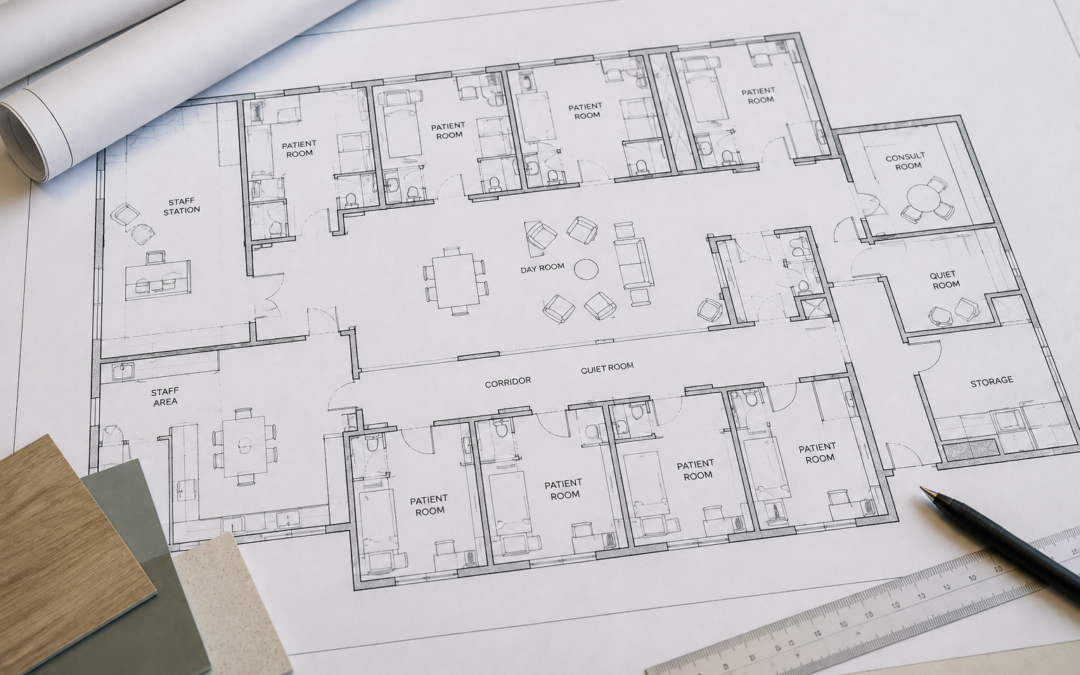
A piece of equipment can fit perfectly on the plans and still be completely wrong for a behavioral health environment. Healthcare construction already requires careful coordination of equipment, utilities, accessibility, infection prevention, life safety, clinical...
read more

Sep 1, 2026 by Barrins & Associates
ACHC, CARF, CMS, DNV, Joint Commission, SAMSHA, State AgenciesBH Organizations, Hospitals
For many behavioral health organizations, telehealth has become part of everyday operations. What began as a response to the COVID-19 public health emergency is now an established method of delivering psychiatric evaluations, therapy, medication management, and other...
read more

Aug 14, 2026 by Barrins & Associates
Accreditation, ACHC, CARF, CMS, compliance building plans, DNV, Joint Commission, State AgenciesBH Organizations, Hospitals
Walking into a newly constructed or renovated behavioral health unit or space is exciting. The paint is fresh, the equipment is in place, and months—or years—of planning have finally come together. But before the first client arrives, leadership should ask one...
read more

Aug 11, 2026 by Barrins & Associates
Accreditation, ACHC, CARF, CIHQ, Joint Commission, SAMHSA, State AgenciesBH Organizations, Hospitals
Behavioral health professionals don’t enter the field because they enjoy documentation. They enter because they want to help people. Yet one of the most common issues Barrins consultants continue to observe during mock surveys and accreditation assessments has...
read more

Aug 4, 2026 by Barrins & Associates
ACHC, CARF, CIHQ, Joint Commission, SAMHSA, State AgenciesBH Organizations, Hospitals
Budget season is almost upon us, and it is one of the few times each year when behavioral health leaders can step back from day-to-day operations and decide where to invest limited resources. Sometimes, accreditation survey readiness doesn’t always make the...
read more

Jul 20, 2026 by Barrins & Associates
Accreditation, ACHC, CARF, CIHQ, Joint Commission, SAMHSABH Organizations
Every accreditation survey provides valuable insight into where behavioral health organizations continue to struggle. In the June issue of JC News, the Joint Commission highlights several behavioral health standards that continue to receive the highest-risk survey...
read more

Jul 14, 2026 by Barrins & Associates
ACHC, CARF, CIHQ, CMS, DNV, JC, QAPI, Social Current (COA), State AgenciesBH Organizations, Hospitals
Every patient complaint tells a story. Sometimes it’s about poor communication. Sometimes it’s a delay in care, confusion about treatment, or concerns over safety. While an individual grievance may seem isolated, a pattern of grievances often reveals...
read more

Jul 7, 2026 by Barrins & Associates
Accreditation, ACHC, CARF, CMS, compliance building plans, DNV, Joint Commission, State AgenciesBH Organizations, Hospitals
Many healthcare construction projects focus heavily on substantial completion and occupancy dates. However, construction teams often discover significant accreditation and regulatory findings during the final stages of construction, often after installing expensive...
read more

Jun 23, 2026 by Barrins & Associates
Accrediation, ACHC, CARF, CIHQ, CMS, compliance building plans, Joint Commission, SAMHSABH Organizations, Hospitals
The most expensive compliance problem in healthcare construction is the one discovered after the building is complete. Every healthcare construction project progresses through three critical design phases: Schematic Design (SD), Design Development (DD), and...
read more

Jun 16, 2026 by Barrins & Associates
Accreditation, ACHC, CARF, CIHQ, CMS, Joint Commission, SAMHSABH Organizations, Hospitals
The Centers for Medicare & Medicaid Services (CMS) recently finalized new requirements that significantly change how Accrediting Organizations (AOs) and their affiliated consulting entities interact with healthcare providers and suppliers seeking accreditation....
read more

Jun 8, 2026 by Barrins & Associates
Accreditation, ACHC, CARF, CIHQ, CMS, Joint Commission, Standards Compliance, Survey ReadinessBH Organizations, Hospitals
Behavioral healthcare organizations invest millions of dollars in new construction, replacement facilities, expansions, and major renovations. Yet one of the most common mistakes organizations make is treating accreditation and regulatory compliance as a final hurdle...
read more

May 18, 2026 by Barrins & Associates
Accreditation, ACHC, CARF, CIHQ, Denial of Accreditation, Immediate Jeopardy, Joint Commission, Standards Compliance, Survey ReadinessBH Organizations
A denial of accreditation is one of the most serious outcomes a behavioral health organization can face, but it is rarely sudden or unexpected. In most cases, it reflects how systems are performing over time, often in areas leaders already recognize as vulnerable....
read more

May 14, 2026 by Barrins & Associates
Accreditation, ACHC, CARF, CMS, Joint Commission, SAMHSA, Standards ComplianceBH Organizations, Hospitals
Over the past year, behavioral health leaders have been asking a similar question: If the standards haven’t changed, why do surveys feel more difficult? The answer is becoming clearer. In 2026, the challenge is about consistently demonstrating compliant processes in...
read more

May 7, 2026 by Barrins & Associates
ACHC, CARF, CMS, COA, Joint Commission, SAMHSA, Standards Compliance, Survey ReadinessBH Organizations, Hospitals
In 2026, psychiatric hospital surveys are not about confirming whether policies exist—they are about proving those policies work in real time. Under Accreditation 360, surveyors are evaluating how care is delivered moment by moment, following patients, testing...
read more

Apr 21, 2026 by Barrins & Associates
CARF, Community Behavioral Health, JAMA, Joint Commission, NASHP, SAMHSABH Organizations
Over the past several years, many conversations across the behavioral health field have focused on developing coordinated crisis and treatment systems that connect hospitals, crisis services, and community-based providers. Behavioral health care in the United States...
read more

Apr 21, 2026 by Barrins & Associates
CCBHC, CMS, Community Behavioral Health, SAMHSABH Organizations, Hospitals
For community behavioral health organizations, the greatest risks rarely occur during clinical encounters. They emerge between visits, during care transitions, and in the complex realities of the communities their patients call home. As care models evolve and crisis...
read more

Apr 14, 2026 by Barrins & Associates
CMS, Joint Commission, SAMHSABH Organizations, Hospitals
Expanding crisis response services and evolving community treatment models are reshaping the behavioral health continuum. These developments present psychiatric hospital leaders with critical operational and regulatory implications. Increasingly, the Joint Commission...
read more

Mar 18, 2026 by Barrins & Associates
CMS, Joint CommissionBH Organizations, Hospitals
In the world of behavioral health compliance, we often find that the most dangerous risks aren’t found in a missing signature or an outdated policy manual—they are found in the gaps where staff choose to stay silent. Whether you are managing a psychiatric...
read more

Mar 12, 2026 by Barrins & Associates
Adverse Events, CARF, Community Behavioral Health, Joint CommissionBH Organizations, Hospitals
Preventing adverse events in 2026 should begin with a careful reflection: what truly drove the serious events of the past year, and how can those lessons shape a stronger approach moving forward? One pattern is increasingly clear. Harm in community behavioral health...
read more

Mar 9, 2026 by Barrins & Associates
CMS, Joint Commission, Psychiatric Facilities, Sentinel EventsBH Organizations, Hospitals
In North Carolina, a violent patient uprising triggered intensified regulatory scrutiny after investigators cited repeated supervision and safety breakdowns. In Hawaii, a patient who transferred out of state due to bed shortages died by suicide, prompting questions...
read more

Feb 13, 2026 by Barrins & Associates
CMS, Joint Commission, Psychiatric Hospital Boards, Survey ReadinessBH Organizations, Hospitals
Accreditation outcomes in 2026 are being shaped less by formal reporting structures and more by how leadership systems function in real time.Whether governance sits with a board, an owner, a founder, or a senior leadership group supported by clinical advisors, one...
read more

Feb 9, 2026 by Barrins & Associates
Accreditation, CARF, Continuous Readiness, Joint CommissionBH Organizations, Hospitals
In 2026, the most resilient Behavioral Health Centers have moved beyond the cycle of preparing for survey and into the era of “operational insurance.” In an environment defined by staffing constraints and tightening margins, accreditation readiness is no...
read more

Feb 3, 2026 by Barrins & Associates
CMS, Governance, Joint Commission, Psychiatric Hospital Boards, Survey ReadinessBH Organizations, Hospitals
Psychiatric hospital boards are entering a governance environment where how oversight happens matters as much as what is reviewed. In 2026, accreditation risk is no longer confined to policies, audits, or frontline performance. Instead, it increasingly resides at the...
read more

Jan 21, 2026 by Barrins & Associates
Accreditation, CARF, Change of Ownership, CMS, CMS Conditions of Participation, Joint Commission, TelehealthBH Organizations, Hospitals
Behavioral health is growing, and leaders are finding increasingly creative ways to expand. One recent example comes from SUN Behavioral Health’s acquisition of Seaside Healthcare, where a senior executive described the strategy this way: “By combining SUN’s...
read more

Jan 13, 2026 by Barrins & Associates
Accreditation 360, Behavioral Health Care, Joint Commission, Standards ComplianceBH Organizations
In preparation for upcoming accreditation surveys, many community behavioral health leaders are asking the same question: Will surveys look or feel different from 2025? The answer is —- not dramatically! Your 2026 survey will still follow the traditional Behavioral...
read more

Jan 6, 2026 by Barrins & Associates
Accreditation 360, Joint Commission, National Performance Goals, National Performance Safety Goals, Survey Accreditation Guide, Survey Process Guide, Survey ReadinessBH Organizations
What to expect from Accreditation 360? It is now fully in effect, completing a multi-year shift in how the Joint Commission evaluates psychiatric hospitals and distinct psychiatric units. While the framework applies across all hospital types, its impact is most...
read more

Dec 17, 2025 by Barrins & Associates
Accreditation 360, AI Chatbots, CMS, continuity of care, Joint Commission, Process RedesignBH Organizations, Hospitals
As we close 2025, the landscape of behavioral healthcare looks radically different from what it did just twelve months ago. This year, we saw the industry move beyond simple “checklist compliance” toward a model focused on systemic accountability,...
read more

Dec 16, 2025 by Barrins & Associates
CARF, CMS, Joint Commission, Social Determinants of Health, TelehealthBH Organizations
Equity in behavioral health is now a foundational requirement. For all settings, the most critical compliance actions you can take are: Assign accountability to a senior leader with authority and budget.Stratify your access and engagement data to uncover disparities....
read more

Dec 15, 2025 by Barrins & Associates
CMS, Health Equity Index, Joint CommissionBH Organizations
Health Equity Requirements According to the Joint Commission and CMS, they are no longer a mission statement, they are a non-negotiable operational standard on par with infection control. Our decades of experience show that compliance depends on a structured,...
read more

Nov 24, 2025 by Barrins & Associates
Accreditation, Behavioral Health, Brent C. James, CCBHC, Philip Crosby, quality improvement, Revenue Cycle, ROIBH Organizations, Hospitals
Long before “doing more with less” became a leadership cliché, Phillip Crosby, quality guru, known for the concept of Zero Defects and author of the influential book, Quality Is Free, showed that quality doesn’t drain resources — it protects them. Crosby’s classic...
read more

Nov 24, 2025 by Barrins & Associates
BH Organizations, Hospitals
Organizations face a growing challenge: accrediting bodies such as The Joint Commission (TJC) and CARF International require comprehensive behavioral health staff education and competency programs, yet modern adult learners often struggle to retain and apply what...
read more

Nov 10, 2025 by Barrins & Associates
accreditation compliance, CMS, continuity of care, EHR, Joint CommissionBH Organizations, Hospitals
Continuity of care is the hospital’s consistent and coordinated provision of services to a patient over time, across different healthcare settings and providers. When done properly, it improves patient outcomes, reduces costs, and increases patient satisfaction....
read more

Oct 24, 2025 by Barrins & Associates
CMS, Joint Commission, SAMHSA, Sentinel EventsBH Organizations, Hospitals
Prefer Video? Video (6 min) Prefer a Podcast? Podcast (6 min) In today’s demanding behavioral health care landscape, resilience has evolved from a desirable trait into a core operational competency. For leaders of Community Behavioral Health (CBH) agencies and...
read more

Oct 14, 2025 by Barrins & Associates
Accreditation, Compliance, Psychiatric Hospitals, Survey ReadinessHospitals
Closing the Policy-to-Practice Gap In psychiatric hospitals, leadership responsibility extends beyond clinical excellence to include rigorous accreditation and regulatory compliance. Many programs have policies on paper, yet frontline workflows still allow variation,...
read more

Oct 7, 2025 by Barrins & Associates
CARF, COA, JC, Medicaid, MHPAEABH Organizations
Even with the 2024 rule on hold (see the APA stance below), CBHC leaders have powerful tools to press payers, strengthen contracts, and protect access. Prefer to watch this short video instead of reading? Go to the 6 minutes video version! Parity in Behavioral...
read more

Sep 25, 2025 by Barrins & Associates
BH Organizations, Hospitals
When working with Behavioral Health Organizations nationwide, one pattern stands out: having the most resources doesn’t drive success, instead it’s by having the strongest leaders. Leadership determines whether staff remain engaged or choose to leave, and...
read more

Sep 13, 2025 by Barrins & Associates
Accreditation, Accreditation 360, Behavioral Health Care, Joint Commission, Survey ReadinessBH Organizations
Community behavioral health providers face a growing challenge: not just delivering care under resource constraints, but proving its impact. Measuring outcomes has long been standard in physical health—blood pressure, blood sugar, cholesterol—but in behavioral health,...
read more
Sep 9, 2025 by Barrins & Associates
Adverse Decision, CMS, Immediate Jeopardy, Joint Commission, Joint Commission surveys, Psychiatric Hospitals, Survey ReadinessHospitals
Imagine the scrutiny a facility faces after a patient’s death. When this happens, surveyors cite serious threats to patient safety—including the frequency of checks for patients in seclusion and the safety of the seclusion space—leading to a preliminary denial...
read more

Aug 25, 2025 by Barrins & Associates
BH Organizations, Hospitals
The integration of AI chatbots into Community Behavioral Health (CBH) and acute psychiatric care offers a powerful opportunity to extend support and ease workforce strain, but it requires careful navigation of significant risks. Key Considerations Benefits: Chatbots...
read more

Aug 19, 2025 by Barrins & Associates
ACHC, CARF, Compliance, Joint CommissionBH Organizations
Telehealth has moved far beyond its pandemic-era roots. Today, it’s not just an option, it’s a necessity. For community-based behavioral health providers, virtual care has expanded access, reduced no-shows, and brought services to patients who might...
read more

Aug 7, 2025 by Barrins & Associates
Accreditation, ACHC, SAMHSA, The Joint CommissionBH Organizations
The U.S. mental health crisis is placing unprecedented strain on emergency departments (EDs). Yet traditional EDs are ill-equipped for patients in acute psychiatric distress—leading to delays in care, increased safety risks, and long boarding times. According to the...
read more

Jul 28, 2025 by Barrins & Associates
accreditation compliance, accreditation standards, behavioral health accreditation, CMS Conditions of Participation, complaint resolution, compliance assessment, consent forms accuracy, documentation audit, grievance process, healthcare regulations, informed consent compliance, Joint Commission surveys, mock surveys, patient complaints management, Patient Rights, policy review, provider education, psychiatric hospital regulations, quality improvement, regulatory compliance, risk management, Safer Matrix, safety and quality improvement, Survey ReadinessBH Organizations
Accreditation surveys frequently reveal gaps in informed consent procedures and complaint/grievance processes. Such deficiencies can result in citations and threaten the facility’s accredited status. Therefore, proactive assessments, staff training, and ongoing...
read more

Jul 28, 2025 by Barrins & Associates
accreditation compliance, accreditation standards, behavioral health accreditation, CMS Conditions of Participation, complaint resolution, compliance assessment, consent forms accuracy, documentation audit, grievance process, healthcare regulations, informed consent compliance, Joint Commission surveys, mock surveys, patient complaints management, Patient Rights, policy review, provider education, psychiatric hospital regulations, quality improvement, regulatory compliance, risk management, Safer Matrix, safety and quality improvement, Survey ReadinessBH Organizations, Hospitals
The Joint Commission (TJC) is leading some of the most significant transformations we’ve seen in decades. Their “Accreditation 360” initiative, the most substantial update since 1965, signals a profound shift. It’s designed to ease...
read more

Jul 10, 2025 by Barrins & Associates
accreditation compliance, behavioral health accreditation, complaint resolution, compliance assessment, consent forms accuracy, documentation audit, grievance process, healthcare regulations, informed consent compliance, Joint Commission surveys, mock surveys, patient complaints management, Patient Rights, policy review, provider education, psychiatric hospital regulations, quality improvement, regulatory compliance, risk management, Safer Matrix, safety and quality improvement, Survey ReadinessHospitals
During The Joint Commission (TJC) surveys, issues with informed consent and how psychiatric hospitals handle patient complaints are among the most common and serious problems found. These issues can lead to findings, increased regulatory scrutiny, and even threaten a...
read more

Jun 16, 2025 by Barrins & Associates
ACHC, Archetctural Ddrawings ligature resistance, Behavioral Health Buildig, CARF, CIHQ, CMS Conditions of Participation, COA, Community Behavioral Health, comprehensive compliance review, DEA, Digital & Technology, DNV, Equipment Planning & Procurement, Fire Marshal, healing environments, infection controlDay in the Life, integrated, JC, licensing, mock surveys, new facility or renovating, Patient Safety, Patient-centered design, psychiatric hospital, seclusion rooms, sensory spaces, Social Current, State Licensing Agencies, State Pharmacy boards, Transition & Activation PlanningBH Organizations, Hospitals
Is a new or remodeled building in your future? Before you embark on a behavioral healthcare facility construction plan, there is one step you should take that’s as essential as the architectural drawings – an accreditation and regulatory compliance review!...
read more
Jun 12, 2025 by Barrins & Associates
behavioral health and human services, Behavioral Health Organizations, Compliance, Emergancy Management Chapter, Emergency Management Standards, emergency preparedness drills, environmental hygiene practices, gap analysis, infection prevention, Joint Commission Revisions, MOUD, Opioid Treatment Programs, Psychiatric Hospitals, R3 Report, Revised Accreditation Participation Requirements, Revised Infection Control Standards, SAMHSA, staff competencies, staff training, surveillance protocolsBH Organizations, Hospitals
The pace of change from The Joint Commission has accelerated markedly this year. With a wave of new and revised standards introduced in quick succession, These revisions signal a significant transformation in how behavioral health organizations and psychiatric...
read more

Jun 5, 2025 by Barrins & Associates
Anxiety, Behavioral Health, Depression, Mental Wellness, Substance Abuse, Truma-Informed CareBH Organizations, Hospitals
Job loss is more than a financial disruption—it’s a psychological event that can unravel one’s identity, security, and sense of purpose. As layoffs continue to affect industries nationwide, mental wellness after job loss, and the impact on individuals is often...
read more

May 19, 2025 by Barrins & Associates
ACHC, CAR, CIHQ, CMS, COA, competency-based staffing, compliance operational efficiency, contracts, cost-effective operations, cross-train staff, data analytics, DNV, dynamic scheduling, environmental safety, financial performance, inventory, invest in retention, JC, medical supplies, patient needs, patient outcomes, performance improvement standards, performance metrics, predictive analytics, procurement, QAPI, real-time monitoring, regulations, risk reduction, standardization, State Agencies, telebahavioral health Virtual Group Sessions, training, utility systems managementBH Organizations, Hospitals
With rising operational costs driven by inflation, labor shortages, and global volatile tariffs on healthcare supplies and equipment, psychiatric hospitals and community behavioral health providers are under increasing pressure to control spending without compromising...
read more

May 15, 2025 by Barrins & Associates
Align with Accreditation and Regulatory Compliance, Better Outcomes, career mobilityenhance patient outcomes, clinical ladders, clinical workforce, competency, continuity of care, credentialing support, Gen Z in Behavioral Health, gigital fluency, mentoship, orientation, patient perception of care, purpose-driven career advancement, purpose-driven work, recruitment and retention, Recruitment and Retention Stragetis, resilience training, restraint, risk screening, seclusion, staff development, staff engagement, Survey Readiness, team-based communication, Tracer activities in surveys, training, trauma assessment, trauma-informed care principals, treatment planning, well-being, workforc shortagesBH Organizations, Hospitals
Amid persistent workforce shortages and changing demographics in behavioral healthcare, psychiatric hospitals and community-based behavioral health, organizations are reimagining recruitment and retention strategies — targeting and attracting Gen Z talent. Generation...
read more

May 8, 2025 by Barrins & Associates
Accrediation, ACHC, Adverse Events, Behavioral Health Settings, CARF, child safety protections, CIHQ, CMS, co-occurring medical conditions, crisis de-escalation, DNV, elopement, environmental hazards, environments, improving safety, incidents, JC, medication errors, mitigate risks, near misses, neglect, patient rights protections, patient trust, perception of care, Performance improvement initiatives, Psychiatric Hospitals, QAPI programs, Regulatory, restraint, risk reduction, robust incident reporting, Safegaurding Behavioral Health Patients/Clients, safety goals, seclusion, self-harm, Sentinel Events, serious physical or psychological harm, sexual abuse, Social Current (COA) and state gencies, staff training, Standards, suicidal ideation, suicide risk screeningBH Organizations, Hospitals
In psychiatric hospitals and community behavioral health organizations, the stakes for patient safety are uniquely high. Patients/Clients often present with acute psychological distress, suicidal ideation, or co-occurring medical conditions — all within environments...
read more

Apr 21, 2025 by Barrins & Associates
accountability, best practices, credentialing & privileging, governing body, Leadership, medical staff bylaws, medical staff governance, Policies, Psychiatric Hospitals, rules and regulations, Survey ReadinessBH Organizations, Hospitals
When it comes to governing a psychiatric hospital’s medical staff, structure, clarity, and accountability are not just important—they’re required. The Joint Commission (TJC) Standard MS.01.01.01 outlines critical expectations for Medical Staff Bylaws, ensuring...
read more

Apr 17, 2025 by Barrins & Associates
Accreditation, aggression or violence, behavioral health environmental risk assessment, CARF, COA, confidentiality, design modifications, environmental controls, environmental safety risks, facility safety, Intensive Outpatient Programs, IOP, JC, manage physical environment risks, medicatin eerors, mitigation strategies, outpatient behavioral health settings, Partial Hospitalization Programs (PHPs), quality improvement, risk management, safety planning, self-harm, Social Current (COA), staff training, SuicideBH Organizations, Hospitals
Increasingly, care delivery occurs in outpatient environments—Intensive Outpatient Programs (IOPs), Partial Hospitalization Programs (PHPs), and office-based therapy settings—where clients may be acutely ill, at elevated risk of harm to self or others, and navigating...
read more

Apr 10, 2025 by Barrins & Associates
Accreditation, aggression or violence, behavioral health environmental risk assessment, CARF, COA, confidentiality, design modifications, environmental controls, environmental safety risks, facility safety, Intensive Outpatient Programs, IOP, JC, manage physical environment risks, medicatin eerors, mitigation strategies, outpatient behavioral health settings, Partial Hospitalization Programs (PHPs), quality improvement, risk management, safety planning, self-harm, Social Current (COA), staff training, SuicideBH Organizations, Hospitals
Emergency departments are often the first—and sometimes only—point of access for individuals in psychiatric crises. But when inpatient psychiatric beds, crisis services, or outpatient programs are unavailable, patients may wait in the emergency department (ED) for...
read more

Mar 20, 2025 by Barrins & Associates
Accreditation, ACHC, ASHRAE, behavioral healthcare facilities, building plans, bulding, CARF, CIHQ, clinical expert, CMS, community behavioral healthcare, compliance building plans, construction, construction desigh, design development, DNV, Enhanced Safety and Quality, FGI Guidelines, guidelines, ICRA, ILSM, integrating comprehensive compliance, JC, K-Tags, life safety expert, NFPA 99 & 101, PCRA, psychiatric hospital, Regulatory, schematic design, Social Current (COA), SRA, State Licensing BoardsBH Organizations, Hospitals
Building a new healthcare facility or remodeling an existing one—especially in specialized areas like psychiatric hospitals and community behavioral health organizations—is an exciting yet complex endeavor. One of the most frequently overlooked aspects is...
read more

Mar 11, 2025 by Barrins & Associates
Accreditation, CARF, CIHQ ACHC, CMS, community behavioral healthcare, DNV, Human Services, JC, psychiatric hospital, Social Current (COA)BH Organizations, Hospitals
Acquiring another organization is a significant milestone, bringing opportunities for growth, expansion, and enhanced service delivery. But, it also introduces complex challenges, particularly in compliance and regulatory oversight. Ensuring a seamless transition...
read more

Mar 4, 2025 by Barrins & Associates
Accreditation, CARF, CIHQ ACHC, CMS, community behavioral healthcare, DNV, Human Services, JC, psychiatric hospital, Social Current (COA)BH Organizations, Hospitals
In the ever-evolving field of behavioral healthcare, ensuring effective treatment and positive outcomes for patients is paramount. One of the most reliable ways to achieve this is through evidence-based practice (EBP). EBP is a method hat integrates the best available...
read more

Feb 17, 2025 by Barrins & Associates
ACHC, Care Delivery, CARF, CIHQ, COA, Commitment to Resilience, DNV, Driving High Reliability, Empowering Frontline Staff, High Reliability in HealthCare, Leading the Way to Zero, Medication for Opioid Use Disorder, MOUD, Multi-disciplinary Case Reviews, Pre-occupation with failure, The Joint Commission, Zero HarmBH Organizations, Hospitals
In today’s rapidly evolving healthcare landscape, the demand for safe, effective, and reliable care has never been higher—especially in the realm of behavioral health and medications for opioid use disorder (MOUD). Achieving consistently high levels of safety and...
read more

Feb 11, 2025 by Barrins & Associates
accountability, Accreditation, best practices, CARF, CIHQ ACHC, client, Compliance, compliance baseline, deficiencies, DNV, engage leaders, Evidence-Based, legal mandates, metrics, morale, noncompliance, operational efficiency, Patient, performance, psychiatric hospital, quality improvement, reduce waste, Regulatory, resilience, safety culture, Social Current (COA), State Agencies, surveysBH Organizations, Hospitals
A CEO transition is a pivotal moment for any psychiatric hospital, behavioral health, or human services organization. In healthcare, this leadership change can ripple through all facets of the institution, including the critical areas of accreditation and regulatory...
read more

Feb 4, 2025 by Barrins & Associates
Accreditation, adverse decisions, best practices, budgets, CARF, CIHQ ACHC, Compliance, cost avoidence, DNV, ehnhances care, electronic health record, engage staff, errors, improve efficiency, improvement, Integration, mitigates risk, mock surveys, operational efficiency, optimizing resource allocation, Patient, psychiatric hospital, Regulatory, return on investiment, ROI, SAMHSA, Social Current (COA), State Agencies, strategic, streamline operations, streamline workflowsBH Organizations, Hospitals
For over 25 years, Barrins & Associates has partnered with psychiatric hospitals and behavioral health and human services providers, guiding them through the complex terrain of accreditation and compliance. With expertise spanning more than 350 organizations...
read more

Jan 20, 2025 by Barrins & Associates
behavioral health and human services, corrective action, ESC, Evidence of Standards compliance, Joint Commission, Patient, patient impact, policies and procedures, psychiatric, psychiatric evaluation, psychiatric hospital, staff training, SurveyBH Organizations, Hospitals
Upon completion of a psychiatric hospital or behavioral health and human services Joint Commission survey, organizations receive a final report of findings approximately 10 business days after the survey’s conclusion. This report outlines areas requiring...
read more

Jan 16, 2025 by Barrins & Associates
action plans, annual review, BHCSafe, CDC, EPs, Healthcare, IC, implementing, Infection Prevention & Control, linen handlings, polices, prevention activities, procedures, requirements, risk identification, Standards, suppliesBH Organizations, Hospitals
Did you know the Joint Commission updated infection prevention and control requirements? In fact, a fully updated Infection Prevention and Control (IC) chapter will take effect on July 1, 2025 for all Joint Commission–accredited behavioral health and human services...
read more

Jan 9, 2025 by Barrins & Associates
Behavioral Health Home, BHH, CARF, CCBHC, Certified Community Behavioral Health Clinic, COA, crisis mental health care, HRSN, IBH, Innovative Care Model, JC, Medicaid, Medicare, mental health, person-centered Care, primary care screening, screen, SMI, SUD, value-based paymentBH Organizations, Hospitals
On December 18, 2024, the Centers for Medicare & Medicaid Services (CMS) announced the selection of Michigan, New York, Oklahoma, and South Carolina state Medicaid agencies to participate in the Innovation in Behavioral Health Model (IBH). This initiative, which...
read more

Dec 3, 2024 by Barrins & Associates
BH Organizations, Hospitals
A safe environment is the cornerstone of quality healthcare and is required by CMS, TJC, DNV, CIHQ, and state agencies. To achieve this, psychiatric hospitals must proactively identify and address safety risks, ensuring compliance with regulations while fostering a...
read more

Nov 20, 2024 by Barrins & Associates
ACHC, CARF, CIHQ, CMS, DNV, JC, SAMHSA, Social Current (COA), State AgenciesBH Organizations, Hospitals
The Joint Commission recently published Sentinel Event Alert #69 “Environmental disasters: Preparing to safely evacuate or shelter in place,” emphasizing the need for U.S. healthcare facilities to prepare for environmental disasters like hurricanes, wildfires, and...
read more

Nov 5, 2024 by Barrins & Associates
42 CFR Part 2, ACHC, Breach Notifications, CARF, Certification, CIHQ, CMS, consent, Counseling, data, DNV, Healthcare, HHS, HIT, Integration, JC, OCR, Patient Notices, Patient Rights, Privacy Notices, Public Health, Record, Safe Harbor, SAMHSA, Social Current (COA), State Agencies, Substance Abuse, SUDBH Organizations, Hospitals
Recent changes to 42 CFR Part 2 were finalized in February 2024 and align the confidentiality regulations for Substance Use Disorder (SUD) records with HIPAA and the HITECH Act. These changes focus on improving care coordination and reducing regulatory burdens for...
read more
Oct 18, 2024 by Barrins & Associates
Adverse Events, Behavioral Health Care, close calls, culture, error, good catches, improvments, JC, just culture, Leadership, near misses, no harm errors, patient safety systems, performance improvement, Proactive Risk Assessment, provision of care, Psychiatric Hospitals, reporting systems, Safety, sentinel event, Standards, workplace violence preventionBH Organizations, Hospitals
In behavioral health settings, reporting near misses is a cornerstone of fostering a culture of safety. Near misses—incidents that could have resulted in harm but did not—are crucial learning opportunities that help prevent future adverse events. The Joint Commission...
read more

Oct 14, 2024 by Barrins & Associates
ACHC, Behavioral Health Care, CARF, CIHQ, CMS, DNV, FMEA, JC, Proactive Risk Assessment, Psychiatric Hospitals, Social Current, State AgenciesBH Organizations, Hospitals
In any healthcare setting, particularly in psychiatric hospitals and community behavioral health care environments, identifying and mitigating risks before they lead to adverse outcomes is crucial. Failure Modes and Effects Analysis (FMEA) is a proactive risk...
read more

Oct 7, 2024 by Barrins & Associates
Anxiety, assessment, Brief rating Aggression of Children and Adolescents, Broset Violence Checklist, Communication, CPI Crisis Development Model, Crisis Prevention, De-escalation, Environemnt, Environment, Joint Commission, Overt Aggression Scale, Patient, Situational Awareness, STAMP tool, Therapeutic, training, workplace ViolenceBH Organizations, Hospitals
Workplace violence (WPV) in psychiatric hospitals and community behavioral health centers remains a significant concern. According to The Joint Commission’s recent EC News and Quick Safety articles, implementing de-escalation techniques plays a critical role in...
read more

Sep 17, 2024 by Barrins & Associates
ACHC, CARF, CIHQ, CMS, DNV, JC, Social Current (COA), State Regulatory Agencies, Suicide, YouthBH Organizations, Hospitals
Youth suicide is a heartbreaking reality that communities around the world grapple with. However, there is hope. By employing creative and compassionate strategies for reducing youth suicide, we can create environments that foster resilience, support mental health,...
read more

Sep 12, 2024 by Barrins & Associates
ACHC, CARF, CIHQ, CMS, competence, DNV, EHR, ethics, JC, legal, policies and procedures, Psychiatric Advanced Directives, Social Current (COA), State Regulatory AgenciesBH Organizations, Hospitals
Psychiatric Advance Directives (PADs) have emerged as essential tools in mental health care. They empower individuals with mental health conditions to maintain autonomy and ensure their treatment preferences are respected during crises. As these directives gain...
read more

Sep 5, 2024 by Barrins & Associates
Accreditation, ACHC, CARF, CIHQ, CMS, DNV, JC, Regulatory, Social Current (COA)BH Organizations, Hospitals
When embarking on the journey of constructing a new healthcare facility, the stakes are incredibly high. The success of the project not only depends on the architectural and construction teams but also on a seamless alignment with accreditation and regulatory...
read more

Aug 26, 2024 by Barrins & Associates
BH Organizations, Hospitals
Assessing staff competencies in psychiatric hospitals and Behavioral Health Care & Human Services organizations is essential for ensuring quality patient care and maintaining high standards across the board. However, the traditional methods of evaluation can often...
read more

Aug 14, 2024 by Barrins & Associates
Behavioral Health, CMS, Critical Access Hospital, Hospital, Inpatient, IPF, IPF PPS, IPFQR, PPS, Prospective Payment System, Psychiatric Facilities, Quality ReportingBH Organizations, Hospitals
In 1999, a significant change in the landscape of mental health care payments was set in motion by Section 124 of the Balanced Budget Refinement Act (BBRA). This legislation mandated the creation of a per diem Prospective Payment System to standardize payments for...
read more

Aug 8, 2024 by Barrins & Associates
Accreditation, ACHC, CARF, CIHQ, COA, DNV, JC, RegulatoryBH Organizations, Hospitals
In the complex and rapidly evolving landscape of healthcare, the role of the board or governing body is more critical than ever. These boards are the strategic stewards of healthcare organizations, tasked with ensuring that healthcare organizations not only survive...
read more

Jul 22, 2024 by Barrins & Associates
BH Organizations, Hospitals
All the Psychiatric Hospital and Community Behavioral Health & Human Resources program accreditors and regulators require the investigation of patient/client safety events. If there is an incident, staff effectiveness is one element that is crucial to assess. This...
read more

Jul 11, 2024 by Barrins & Associates
Accreditation, Behavioral Health, Human Services, physical hold, policies and procedures, restraint, seclusion, The Joint CommissionBH Organizations
Effective January 1, 2025, the Joint Commission has approved new and revised requirements for Behavioral Health and Human Services organizations accredited under the Comprehensive Accreditation Manual for Behavioral Health and Human Services regarding the use of...
read more

Jul 2, 2024 by Barrins & Associates
Department of Standards and Survey Methods, Joint Commission, Opioid Treatment Programs, Prepublication StandardsBH Organizations, Hospitals
The Joint Commission recently released new requirements for Behavioral Health and Human Services organizations treating Opioid Use Disorder. Opioid use and its associated consequences, such as overdose, represent a significant health care issue in the United States....
read more

Jun 24, 2024 by Barrins & Associates
Behavioral Health Care, Care, CDC, Certification, clinical records, Compliance, Cybersecurty, electronic medical record, evidence-based guidelines, GDPR, hand hygiene, HIPAA, Infection prevention and Control, licensed, nurses, personnel, physician assistants, Policies, PPE, prevention, procedures, Quality, risk, safe, scope of practice, standard precautions, Standards, SurveyBH Organizations, Hospitals
Did you know a federal jury in Ft. Lauderdale, Florida has convicted Gail Russ, Cassandre Jean, and Vilaire Duroseau of wire fraud and conspiracy to commit wire fraud for their roles in a fraudulent nursing diploma scheme. These individuals were part of a larger...
read more

Jun 18, 2024 by Barrins & Associates
BH Organizations, Hospitals, JC & CMS News Blog
The Joint Commission (TJC) is launching a new Telehealth accreditation program (TEL) effective July 1, 2024 designed for health care organizations that provide care through telehealth or offer telehealth services to another organization’s patients. Recognizing...
read more

Jun 4, 2024 by Barrins & Associates
BH Organizations, Hospitals
In our May 8, 2024 Blog, we discussed strategies for optimizing electronic health records (EHRs) specifically for psychiatric hospitals and community behavioral health providers. As a follow-up, this blog focuses on the essential factors to consider when selecting an...
read more

May 13, 2024 by Barrins & Associates
BH Organizations, Hospitals
In the ever-evolving landscape of psychiatric hospitals and community behavioral health care, one of the most promising advancements lies in the role of AI in healthcare, specifically through its integration into behavioral health services. As we continue to recognize...
read more

May 8, 2024 by Barrins & Associates
ACHC, CARF, CIHQ, CMS, COA, DNV, JC, State Regulatory AgenciesBH Organizations, Hospitals, Uncategorized
In the realm of psychiatric hospitals and community behavioral health providers, Electronic Health Records (EHRs) play a pivotal role in delivering quality care while ensuring compliance with accreditation and regulatory standards. These facilities handle sensitive...
read more

May 2, 2024 by Barrins & Associates
ACHC, CARF, CIHQ, CMS, COA, DNV, JC, State Regulatory AgenciesBH Organizations, Hospitals
The National Quality Forum (NQF), an affiliate of the Joint Commission, has launched a groundbreaking initiative called “Focus on HARM” to combat the persistently high rates of avoidable medical errors and preventable patient harm in healthcare. Despite...
read more

Apr 18, 2024 by Barrins & Associates
CARF, Clients, COA, JC, MBC, The Joint CommissionBH Organizations
In the ever-evolving landscape of behavioral health care, there is a growing emphasis on adopting evidence-based practices to improve client outcomes. Implementing Measurement-Based Care (MBC) is one approach that is gaining traction. It involves systematically...
read more

Apr 18, 2024 by Barrins & Associates
Accreditor, CARF, Clients, COA, Compliance, JC, Safety, The Joint Commission, workplace ViolenceBH Organizations, Hospitals
Starting July 1, 2024, the Joint Commission (JC) has updated workplace violence prevention standards for all Joint Commission-accredited Behavioral Health Care and Human Services (BHC & HS) organizations. New and Revised Workplace Violence Standards These updated...
read more

Apr 11, 2024 by Barrins & Associates
ACHC, CARF, CIHQ, CMS, CPOE, DNV, Hi-Tech Act, HIPAA, JC, QSOBH Organizations, Hospitals
In the fast-paced realm of healthcare, effective communication among healthcare team members is essential to quality patient care. The advent of technology, particularly texting, has revolutionized the way healthcare professionals communicate. However, with innovation...
read more

Mar 19, 2024 by Barrins & Associates
Behavioral Health & Human Services, Hospitals, Psychiatric HospitalsBH Organizations, Hospitals
In the realm of healthcare, ensuring the safety and well-being of patients/clients is paramount. However, when it comes to behavioral health, where vulnerabilities may be more complex and nuanced, cultivating a culture of safety becomes even more critical. The Joint...
read more

Mar 14, 2024 by Barrins & Associates
Accreditation, assessment, competence, competency, continuous monitoring, documentation, Joint Commission, licensed practitioner, performance improvement, physical hold, physician, plan for care, policies and procedures, reassessment, requirements, restraint, Safety, seclusion, Standards, treatment and servicesBH Organizations, Hospitals
The Joint Commission is proposing changes to the restraint, seclusion, and physical holding standards in the Behavioral Health Care and Human Services standards manual. The proposed rewrite aims to increase clarity and reduce duplicative requirements by streamlining...
read more

Mar 7, 2024 by Barrins & Associates
Accreditation, Accrediting Bodie, Accreditor, ACHC, CARF, Certification, CIHQ, CMS, COPs, DNV, JC, Medicaid, Medicare, Quality, Regulatory, Safety, standard, surveysBH Organizations, Hospitals
In an ongoing effort to ensure the highest standards of quality and safety in healthcare facilities participating in Medicare and Medicaid programs, the Centers for Medicare & Medicaid Services (CMS) has proposed significant changes to enhance its oversight of...
read more

Feb 16, 2024 by Barrins & Associates
Accreditation, Accrediting Bodies, Accreditor, ACHC, CARF, CIHQ, CMS, Complaints, COPs, DNV, Grievances, JC, Medicare Certification, Regulatory, Regulatory Organizations, Responsibilities, RightsBH Organizations, Hospitals
In any healthcare system, the rights and responsibilities of patients/clients and their families are vital. One critical aspect of this is the ability to voice concerns and have them addressed in a timely and effective manner. The Joint Commission Hospital and...
read more

Feb 15, 2024 by Barrins & Associates
Accreditation, ACHC, CARF, CIHQ, CMS, JCBH Organizations
As of July 1, 2024, Joint Commission Accredited Psychiatric Hospitals accredited under the Comprehensive Accreditation Manual for Hospitals, must comply with new and revised infection prevention and control requirements. This overhaul involves a comprehensive rewrite...
read more

Feb 7, 2024 by Barrins & Associates
BH Organizations, Hospitals
In 2023, the healthcare industry witnessed a considerable number of citations issued to hospitals across the United States. According to data from the Centers for Medicare & Medicaid Services (CMS), a total of 4,980 citations were delivered to hospitals during the...
read more

Jan 9, 2024 by Barrins & Associates
Accreditation, Compliance, Culture of Safety, Joint Commission, Quality, Standards, workplace ViolenceBH Organizations
Starting July 1, 2024, The Joint Commission approved a set of fresh and updated workplace violence prevention criteria, applicable to all Behavioral Health Care and Human Services (BHC & HS) organizations accredited by the Joint Commission. Three new and one...
read more

Jan 5, 2024 by Barrins & Associates
CCBHC, Certified Community Behavioral Health Clinic, Compliance, EPs, Joint Commission, SAMHSA, Standards, SurveyBH Organizations, Hospitals
Joint Commission launched its Certified Community Behavioral Health Clinic (CCBHC) accreditation program on July 1, 2023. Recently, the Joint Commission approved a set of new and revised CCBHC requirements specifically designed for organizations selecting the CCBHC...
read more

Jan 4, 2024 by Barrins & Associates
HBIPS; ORYX Measures, Hospitals, Joint Commission, Measures, Psychiatric HospitalsBH Organizations, Hospitals
In a significant development, The Joint Commission has implemented updates to the 2024 ORYX Performance Measures reporting requirements, effective as of January 1, 2024. These changes are applicable to critical access hospitals, acute care hospitals, and freestanding...
read more
Dec 18, 2023 by Barrins & Associates
BH Organizations, Hospitals
Joint Commission has made significant changes to their definition of a sentinel event related to suicide. These changes, set to take effect on January 1, 2024, have surprised organizations because TJC typically provides a generous six-month notice for alterations to...
read more

Dec 13, 2023 by Barrins & Associates
Accreditation, Behavioral Health Care, Compliance, Joint Commission, Opioid Treatment Programs, Regulatory, SAMHSABH Organizations, Hospitals
Winter is here! Are you aware that The Joint Commission has recently revised its accreditation eligibility criteria for opioid treatment programs (OTPs)? This update holds significant importance for both Hospitals and Behavioral Health Care organizations with OTP...
read more

Nov 16, 2023 by Barrins & Associates
CMS, Compliance, Deemed Status, Joint Commission, Standards, Validation SurveyJC & CMS News Blog
The US Centers for Medicare & Medicaid Services (CMS) recently announced significant changes to its validation survey process for accrediting organizations (AOs). This update is aimed at streamlining the evaluation process while maintaining the highest standards...
read more

Oct 26, 2023 by Barrins & Associates
Joint CommissionBH Organizations
Non-attendance of treatment groups is a common phenomenon in mental health care settings, and it can have negative consequences for both the individuals served and the service provider. According to some studies, non-attendance can lead to financial costs for the...
read more

Oct 19, 2023 by Barrins & Associates
BH Organizations
In the realm of Behavioral Health Care (BHC) organizations, creating a safe and supportive environment is paramount. However, several physical environment challenges pose challenges that demand careful attention and mitigation strategies to ensure the well-being of...
read more

Oct 12, 2023 by Barrins & Associates
Joint Commission, Standards ComplianceBH Organizations
The Joint Commission places a strong emphasis on reducing the use of restraints and seclusion in psychiatric hospitals and behavioral health care organizations. These settings play a vital role in offering care and support to individuals facing behavioral health...
read more

Oct 5, 2023 by Barrins & Associates
Compliance, Joint Commission, Standards, SurveyBH Organizations, Hospitals
In the realm of behavioral health, where individuals grapple with the complex interplay of mental health challenges, substance use disorders, and traumatic experiences, a compassionate approach can make all the difference. Trauma-informed care is a guiding principle...
read more

Oct 2, 2023 by Barrins & Associates
Compliance, Joint Commission, Standards, SurveyBH Organizations, Hospitals
The Centers for Medicare & Medicaid Services (CMS) recently issued crucial updates regarding accreditation processes for healthcare organizations. These updates, detailed in a memo dated September 15, 2023, have far-reaching implications for how Hospitals and...
read more

Aug 30, 2023 by Barrins & Associates
Compliance, Leaders, Staff, Standards, Survey, The Joint CommissionBH Organizations, JC & CMS News Blog
You may know that the TJC National Patient Safety Goal 15.01.01, Reduce the Risk of Suicide, EPs 1-5 are the five most cited standard and elements of performance in the Behavioral Health Care Standards Manual (CAMBHC). However, you may not know the next 5 most cited...
read more

Aug 8, 2023 by Barrins & Associates
Accreditation, Compliance, Joint Commission, Leaders, Outcomes, Safety, Staff, Standards, Survey, Survey ReadinessBH Organizations, Hospitals
Did you know that the Joint Commission continues to place an emphasis on workplace violence prevention and response? TJC has several standards that support the development of a workplace violence program based on an annual worksite analysis. In fact, it is the...
read more

Jul 10, 2023 by Barrins & Associates
CMS Regulations, Joint Commission, Standards ComplianceBH Organizations, Hospitals
In a recent email, The Centers for Medicare and Medicaid (CMS) released an important memo that outlines updates and guidelines for all Accrediting Organizations (AO). The memo, effective from July 14, 2023, includes several important points that will impact TJC’s...
read more

Jul 5, 2023 by Barrins & Associates
JC & CMS News Blog, News
For licensing purposes, health care facilities are required to have pre construction risk assessment (PCRA) and infection control risk assessment (ICRA) processes established. But anyone who has tackled a construction project knows that identifying potential...
read more

Jun 26, 2023 by Barrins & Associates
Accreditation, Compliance, Joint Commission, Quality, Regulatory, Safety, StandardsBH Organizations, Hospitals, JC & CMS News Blog
In 2022, nearly half of the nation’s hospitals ended the year in the red. With budgets under pressure, healthcare organizations have been forced to take a variety of steps to cut expenses. But when it comes to the essential services a hospital needs to elevate patient...
read more

Jun 6, 2023 by Barrins & Associates
Accreditation, Compliance, Joint Commission, Regulatory, Root Cause, StandardsBH Organizations, JC & CMS News Blog
Joint Commission accreditation is not only a mark of excellence but also a requirement for deemed providers receiving CMS funding and demonstrating a commitment to patient safety. However, the accreditation process can be rigorous, and a preliminary denial of...
read more

May 23, 2023 by Barrins & Associates
Environment of Care, Evidence-Based, Human Resources, Infection Control, Joint Commission, Medication Management, National Patient Safety Goals, Quality of Care, Safety, Standards, SuicideBH Organizations, Hospitals
Did you know that the Joint Commission has standards that support the provision of high-quality crisis services in both Hospital and Behavioral Health settings? In fact, the Joint Commission has had these standards for years. However, these standards have never been...
read more

May 17, 2023 by Barrins & Associates
Compliance, Evidence-Based, Joint Commission, Leadership, Patient Safety, Quality of Care, Standards, Suicide RiskBH Organizations, Hospitals
Did you know that suicide is the 10th leading cause of death in the U.S?. And with no improvement in suicide rates, the Joint Commission continues to emphasize the NPSG suicide risk reduction standard 15.01.01.01. This standard highlights the importance of identifying...
read more

May 9, 2023 by Barrins & Associates
Evidence-Based Treatment, Joint Commission, Leadership, Quality of Care, Standards ComplianceBH Organizations, Hospitals
Are you aware that The Joint Commission updated the standard (LD.04.02.03 EP1) addressing ethical issues in healthcare? This is an important change to note for both Hospitals and Behavioral Health Care organizations. In fact, this update does not introduce a new...
read more

Apr 19, 2023 by Barrins & Associates
Joint Commission, Patient Safety, Standards ComplianceHospitals
Did you know the Joint Commission published a February update to the 2023 standards? And similar to an annual spring cleaning, it is time to dust off the standards that need attention and get them organized with the new updates! Joint Commission February 2023...
read more

Apr 11, 2023 by Barrins & Associates
Accreditation, The Joint CommissionBH Organizations, Hospitals
Take note of these important new standards! The Joint Commission will launch the new Certified Community Behavioral Health Clinic (CCBHC) standards on July 1, 2023. It’s important to know that both Hospitals and Behavioral Health Care organizations have Certified...
read more

Mar 17, 2023 by Barrins & Associates
Joint Commission, Standards Compliance, Survey ReadinessBH Organizations, Hospitals
Be aware! There’s a Joint Commission focus on pregnancy and mental health conditions. TJC recently published Quick Safety Issue 67: Mental Health Conditions Leading Cause of Pregnancy-Related Deaths. The TJC article covers the recent report from the Centers for...
read more

Mar 15, 2023 by Barrins & Associates
Standards Compliance, Survey Readiness, The Joint CommissionBH Organizations, Hospitals
Be aware! The Joint Commission standard on medication administration (MM.06.01.01 EP 3) is one surveyors frequently cite for both Hospitals and Behavioral Health Care organizations. In fact, it’s typically because medications are not administered consistent with...
read more
Feb 23, 2023 by Barrins & Associates
New Clients
Akron Children’s Hospital is a pediatric acute care hospital in Akron, Ohio. Their continuum of behavioral health services includes inpatient, PHP, IOP, and outpatient addictions treatment. Akron Children’s Hospital is Joint Commission accredited and CMS certified....
read more

Feb 17, 2023 by Barrins & Associates
Leadership, Standards Compliance, Survey Readiness, The Joint CommissionBH Organizations, Hospitals
The Joint Commission’s contract services requirements have been around for a while. However, survey findings in this area still occur frequently as we saw throughout 2022. So, we thought a brief refresher on this topic might be helpful. Evaluating Contract Services: A...
read more