

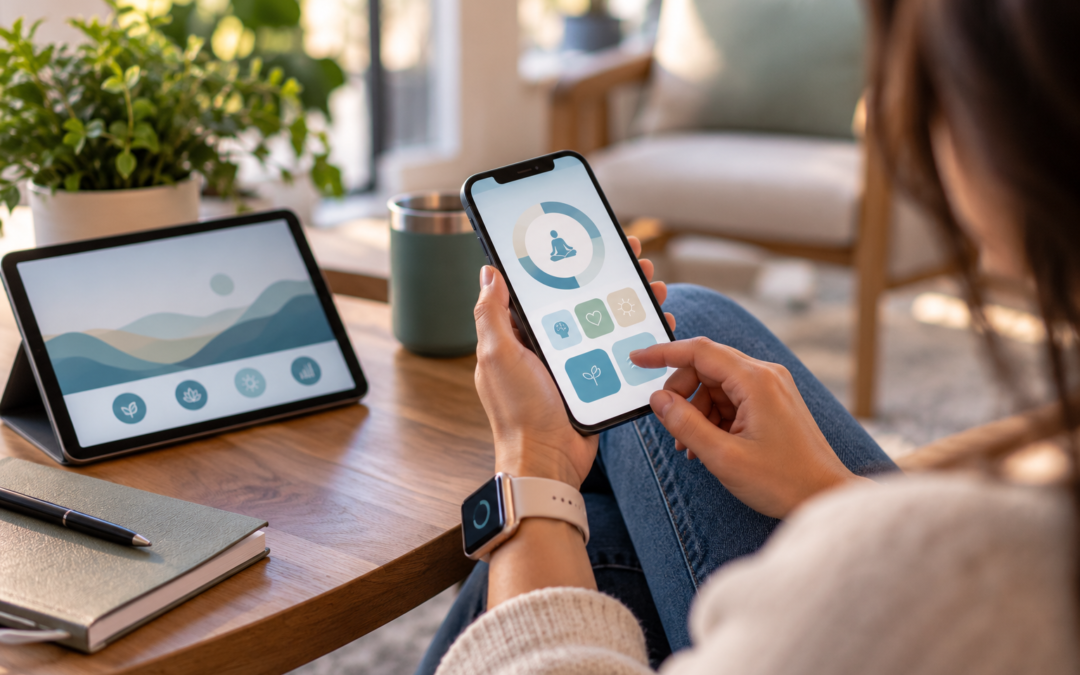
Digital tools are moving beyond scheduling, documentation, and telehealth. Some are now part of treatment itself—creating new opportunities and new considerations for behavioral health leaders.
Technology has been part of behavioral healthcare for years. Electronic health records, telehealth, electronic medication systems, security technology, mobile devices, and communication systems are now routine.
But something different is happening. Technology is increasingly becoming part of the treatment itself.
Digital therapeutics can deliver evidence-based behavioral interventions through software. Remote monitoring and wearable devices can provide information between visits. Mobile applications can support treatment. Artificial intelligence is beginning to influence how consumers seek mental health information and how clinicians interact with technology.
Technology is increasingly becoming part of the care itself—and CMS is signaling that technology-supported care will play a growing role in how behavioral health services are delivered and paid for. In September, CMS announced that its ACCESS Model—which supports and pays for technology-enabled chronic care—will expand to substance use disorders in 2027, signaling a growing role for technology-supported care in behavioral health treatment and reimbursement.
In addition, last year, CMS established three new billing codes for certain Digital Mental Health Treatment (DMHT) devices used in conjunction with ongoing behavioral health treatment. CMS subsequently expanded its policy for 2026 to include qualifying FDA-cleared digital therapy devices for ADHD.
For behavioral health leaders, this isn’t just an IT story anymore.
It is becoming a clinical, operational, financial, and regulatory story.
What Exactly Is a Digital Therapeutic?
If the term is unfamiliar, you’re probably not alone.
A digital therapeutic isn’t simply a wellness app downloaded from an app store.
The American Psychological Association describes digital therapeutics as software programs designed to deliver evidence-based, clinically validated interventions to diagnose, treat, or prevent mental and behavioral health disorders. Some require an order or prescription from a licensed practitioner and, when regulated as Software as a Medical Device, are subject to FDA oversight.
Think of software being used as part of treatment, rather than software simply helping administer treatment.
What Does This Look Like in Real Life?
Some digital therapeutics are actual FDA-cleared prescription medical devices—not simply wellness apps.
For example, FDA has cleared prescription digital therapeutics that:
- provide a six-week app-based treatment program for adults with major depressive disorder, used as an adjunct to clinician-managed outpatient care;
- deliver cognitive behavioral therapy through a mobile application for adults with generalized anxiety disorder, available by order of a licensed healthcare provider;
- treat ADHD through an interactive video-game experience designed to target attentional function; and
- support treatment for opioid use disorder through prescription software used in conjunction with outpatient treatment, including medication and contingency management.
These examples illustrate just how far digital technology has moved into behavioral healthcare. Software itself can now become part of a client’s treatment plan, bringing with it considerations for clinical oversight, documentation, monitoring, privacy, and, in some circumstances, reimbursement.
For organizations considering these technologies, the important distinction is whether a product is simply a consumer wellness application or a medical device that has been reviewed by FDA for a specific intended use.
FDA examples and source documentation:
- FDA — Major Depressive Disorder Digital Therapeutic Clearance
- FDA — Generalized Anxiety Disorder Digital Therapeutic Clearance
- FDA — ADHD Digital Therapeutic Clearance
- FDA — Opioid Use Disorder Digital Therapeutic Clearance
These aren’t simply wellness apps. They illustrate how software itself can become part of a treatment plan—with clinician involvement, documentation, monitoring, and, in some circumstances, reimbursement implications.
That represents a significant change in the role technology can play in behavioral healthcare.
Not Every Mental Health App Is a Digital Therapeutic
This distinction is becoming increasingly important.
Consumers have access to thousands of wellness and mental health applications. Some offer meditation, mood tracking, journaling, sleep support, or other wellness functions.
Those aren’t necessarily digital therapeutics.
APA notes that many consumer wellness apps don’t require a prescription, aren’t FDA regulated as medical devices, and may not be subject to HIPAA in the same manner as systems operated by healthcare providers. FDA-regulated digital therapeutics operate in a different environment.
And then there is artificial intelligence.
Consumers are already turning to general-purpose AI chatbots for mental health information, emotional support, and advice. Behavioral health organizations are also exploring AI-assisted documentation, clinical decision support, client communication, administrative functions, and other applications.
APA has cautioned that general-purpose generative AI chatbots used for mental health purposes may lack adequate clinical validation and safety protocols and should not replace qualified mental health professionals.
The important point for behavioral health leaders is that “digital technology” now describes very different things.
A scheduling app, a telehealth platform, an FDA-cleared prescription digital therapeutic, an AI documentation assistant, and a consumer chatbot may all involve software.
They do not carry the same clinical purpose, evidence, oversight, privacy considerations, or regulatory implications.
Organizations need to understand the distinction before deciding how—and whether—a technology fits into care.
What Does This Have to Do With Survey Readiness?
Quite a lot.
As technology becomes integrated into care, it needs to become integrated into the organization’s clinical and operational systems as well.
If a digital therapeutic becomes part of a client’s treatment plan, the organization needs to determine how that intervention is incorporated into care. Clinicians need to understand their responsibilities. Information generated by the technology may need to be reviewed and acted upon. Documentation needs to accurately reflect the care being delivered. Staff need appropriate education. Privacy and security considerations also need to be addressed.
The same principle applies to technology supporting operations.
A new telehealth platform, communication system, clinical interface, AI tool, or other technology can change how staff perform a process.
That is where survey readiness can lag behind technology adoption.
Policies may still describe the old process. Training may not reflect the new workflow. Responsibilities for reviewing information generated by the technology may be unclear. A new system may be introduced without determining how competency will be assessed or how the process will be handled when the technology isn’t available.
Technology can change the process without anyone remembering to change the policy, training, competency, or readiness plan. That is the gap leaders need to watch.
Planning for Technology Is Changing Too
These changes also have implications for new construction and renovation.
Technology planning used to be easier to think about as infrastructure: network connections, computers, phones, security systems, audiovisual equipment, and other systems needed to operate the facility.
That list has become considerably more complex.
Healthcare Building Solutions approaches healthcare technology planning as an interconnected ecosystem that includes clinical systems integration, IT infrastructure, wireless and mobility, security, audiovisual systems, and other digital technologies. An important part of that planning is considering not only today’s technology but the infrastructure needed to accommodate future change.
That future flexibility matters.
A behavioral health facility being designed today may operate for decades. The digital tools clinicians and clients use five or ten years from now may not even exist yet.
Organizations don’t need to predict every future technology.
They do need to consider connectivity, infrastructure, interoperability, privacy, workflow, and flexibility early enough in planning that tomorrow’s technology isn’t unnecessarily difficult or expensive to adopt.
For behavioral health organizations, clinical and regulatory expertise should be part of that discussion—not added at the end.
Now That You Depend on It—What Happens During Downtime?
There is another consequence of successful technology adoption that can be easy to overlook.
Once a technology becomes routine, the organization becomes dependent on it.
Staff stop thinking about how they worked before the electronic health record, electronic access control, mobile communication system, telehealth platform, or other digital tool. The technology simply becomes part of the workflow.
Until it isn’t available.
Downtime planning therefore needs to evolve along with technology adoption.
Organizations should identify which clinical and operational functions depend on critical systems and establish practical alternatives when those systems aren’t available.
For example, staff need to know:
- how documentation continues during an EHR outage,
- how essential client information will be accessed,
- how communication will occur when normal systems are unavailable, and
- how other technology-dependent processes will continue.
Those processes should be tested, not simply documented.
An IT disaster-recovery plan focuses on restoring the technology.
An operational downtime plan tells the behavioral health team how to continue providing care until that happens.
Both matter.
Key Takeaway
Digital technology in behavioral healthcare is no longer just infrastructure supporting care. Increasingly, technology can be part of the care itself.
Digital therapeutics, AI, remote monitoring, telehealth, connected systems, and technologies we haven’t yet imagined will continue to change how behavioral healthcare is delivered.
Organizations don’t need to adopt every new technology. They do need a thoughtful process for understanding what a technology does, the evidence supporting it, how it fits into clinical care and operations, its regulatory and privacy implications, and how the organization will function when it isn’t available.
The Barrins Perspective
For behavioral health leaders, technology decisions increasingly sit at the intersection of clinical care, operations, regulatory compliance, and IT.
Whether you’re evaluating a digital therapeutic, introducing an AI tool, upgrading an existing system, or designing a new facility, bring those perspectives together early enough to influence the decision.
The question isn’t simply whether the technology works.
It is whether it works for your organization, your staff, and the clients you serve—and whether your clinical and operational systems have kept pace with it.
Next Steps
Take an inventory of the digital technologies that have become part of your clinical and operational workflows over the past few years.
Identify those that have changed how care is delivered, documented, communicated, or monitored. Then make sure your policies, staff education, clinical oversight, downtime procedures, privacy protections, and readiness activities have kept pace.
For organizations planning a renovation or new facility, this review should happen during design—not after opening.
Barrins & Associates and Healthcare Building Solutions can bring behavioral health accreditation and regulatory expertise together with digital technology, equipment planning, transition planning, and facility activation—helping organizations plan for both the technology they need today and the changes ahead.
Frequently Asked Questions
What is a digital therapeutic?
A digital therapeutic is software that delivers evidence-based, clinically validated interventions to diagnose, treat, or prevent mental and behavioral health disorders. Some require an order or prescription from a licensed practitioner. When one is regulated as Software as a Medical Device, it falls under FDA oversight.
Is a mental health app the same as a digital therapeutic?
Not necessarily. Many consumer wellness apps offer meditation, mood tracking, journaling, or sleep support. They don’t require a prescription, aren’t regulated by the FDA as medical devices, and may not be covered by HIPAA the way provider-operated systems are. FDA-cleared digital therapeutics are reviewed for a specific intended use.
Does CMS pay for digital mental health treatment?
CMS has created billing codes for certain Digital Mental Health Treatment (DMHT) devices used alongside ongoing behavioral health treatment. It expanded that policy for 2026 to include qualifying FDA-cleared digital therapy devices for ADHD. CMS has also announced that its ACCESS Model will expand to substance use disorders in 2027.
How do digital therapeutics affect survey readiness?
When a technology becomes part of treatment or changes a workflow, the organization’s policies, training, competency assessment, and documentation all need to be updated to match. Surveyors look at whether practice matches policy. A new technology can change the process without anyone updating those supporting systems.
What should a behavioral health downtime plan include?
It should identify which clinical and operational functions depend on critical systems. It should then set practical alternatives for documentation, access to client information, and communication while those systems are unavailable. These procedures should be tested, not just written down. A downtime plan is separate from IT disaster recovery: it covers how care continues while the technology is being restored.